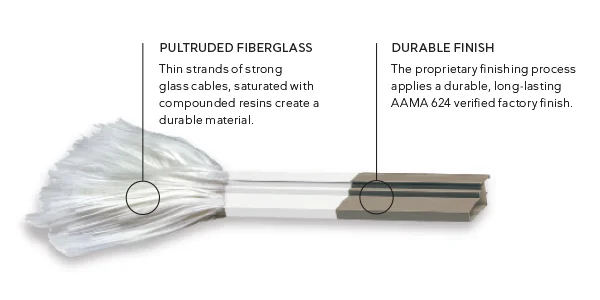
Pultruded fiberglass windows are made by pulling glass fibers through resin and heat-curing them into rigid profiles, similar to how fiberglass boat hulls are made. This process creates a material that’s stronger than vinyl, expands and contracts at nearly the same rate as glass, resists warping, and holds paint well, making these windows more durable and energy-efficient over time.
This article breaks down what pultruded fiberglass is, how it’s made, and why it consistently outperforms other frame materials. Whether you’re replacing aging windows or building new ones, Davis Window and Door is here to help you decide with confidence.
What Are Pultruded Fiberglass Windows?
Pultruded fiberglass window frames are reinforced through a manufacturing process called pultrusion. This method pulls continuous glass fibers through a resin bath and a heated die to create an exceptionally strong, uniform profile.
This is different from common fiberglass, like what you’d find in insulation batts or boat hulls, which is layered by hand or molded. Unlike common fiberglass, the pultruded version is denser, more dimensionally consistent, and significantly stronger. That manufacturing difference is exactly why fiberglass window frames perform so differently from vinyl or aluminum alternatives.
| Metric | Fiberglass (Pultruded) | Vinyl | Aluminum |
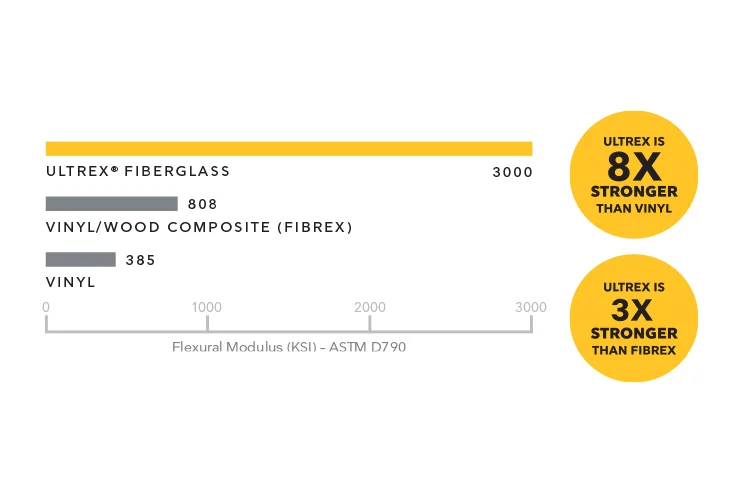
| Relative strength | ~8x stronger than vinyl | Baseline | Strong but brittle in cold |
| Thermal conductivity | Significantly lower thermal conductivity | Low | High — needs thermal breaks |
| Embodied energy | Lowest of the three | ~39% more than fiberglass | ~80% more than fiberglass |
| Expected lifespan | 30–50+ years | 20–30 years | 20–30 years (coating-dependent) |
| Avg. cost per window | $700–$1,400 | $150–$600 | $80–$500 |
Learn more about different window materials in our guide.
How the Pultrusion Process Works
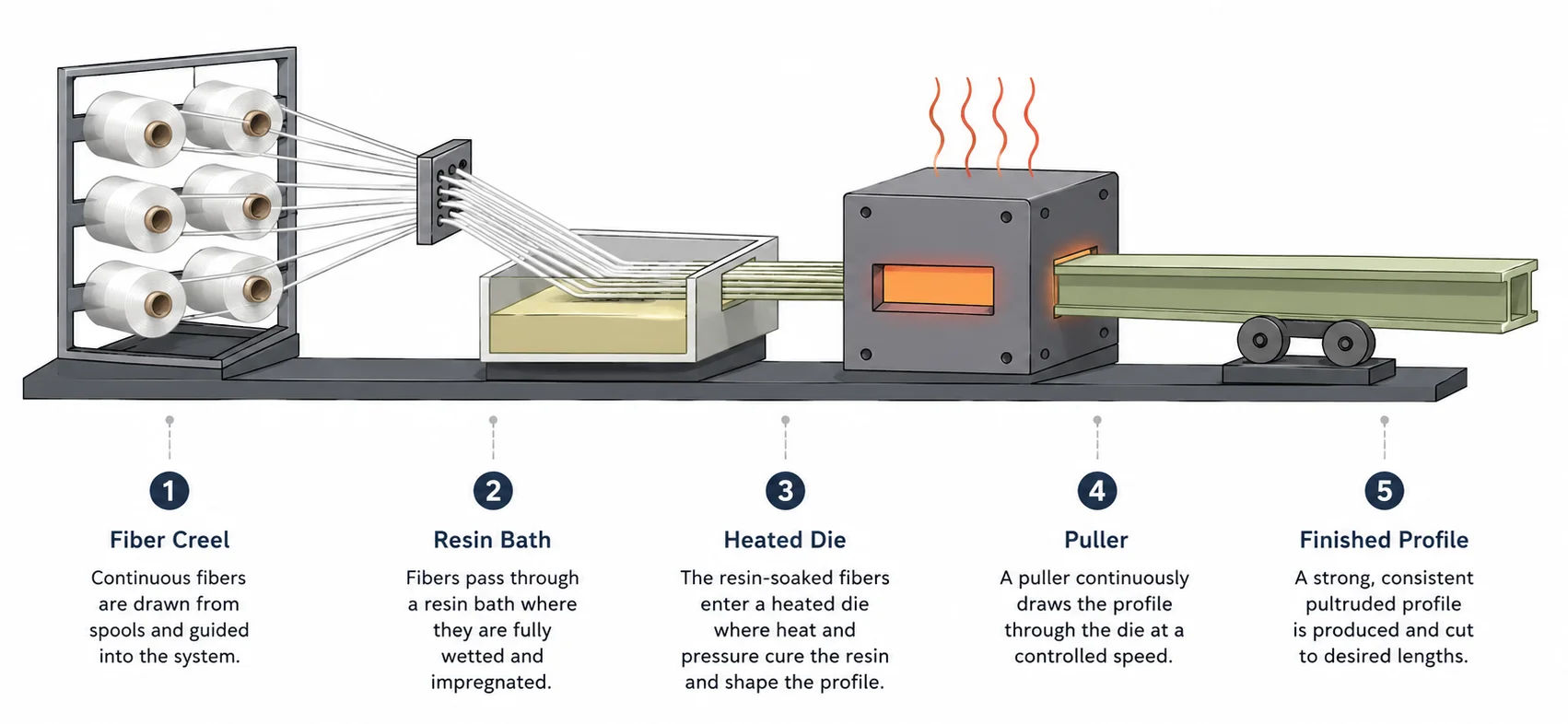
The pultrusion process follows a clear, repeatable sequence that gives fiberglass window systems their structural consistency:
- Continuous glass fiber strands are fed into the process from large spools.
- Those fibers are pulled through a resin bath that saturates them completely with thermoset resin.
- The saturated fibers are pulled through a heated steel die that shapes and cures them into a precise window frame profile.
- The finished profile is cut to length for use.
The keyword is “pull.” Pultrusion gets its name from pulling material through the die, unlike extrusion, which pushes it. This process creates a solid, consistent structure with no air pockets, giving fiberglass window frames their dimensional stability.
What’s Inside a Finished Fiberglass Window Frame
- Fiber reinforcement: Continuous fiberglass rovings for structural strength
- Resin matrix: Polyester, vinyl ester, or polyurethane binding the fibers
- Surface veil/coating: Protects against UV and weathering, holds paint or factory finish
- Insulating cores: Fill hollow chambers to boost thermal performance
- Seals and gaskets: Maintain airtightness as temperatures shift
- Glazing: Single, double, or triple pane, often Low-E and gas-filled
Marvin’s fiberglass collections showcase this construction in different ways. Essential windows use Ultrex fiberglass on both the interior and exterior. Elevate pairs an Ultrex fiberglass exterior with a natural wood interior. Modern uses a distinct High-Density Fiberglass exterior, available with aluminum or wood interior options.
Why Fiberglass Window Frames Are Among the Most Energy Efficient Options
Fiberglass window frames outperform aluminum and vinyl for two specific physics-based reasons.
First, fiberglass is a poor thermal conductor. It doesn’t transfer heat or cold the way aluminum does. Think of the difference between touching a metal spoon versus a wooden one resting on a hot stove. Aluminum window frames behave like that metal spoon, pulling warmth out of your home in winter and drawing heat in during summer.
Second, industry testing shows pultruded fiberglass has a thermal expansion rate nearly identical to glass. When frames and glass expand and contract at the same rate through seasonal temperature changes, the seal between them stays intact longer. Fewer gaps mean fewer drafts and less heat loss over the window’s life.
This same stability makes fiberglass frames resistant to condensation and less prone to becoming brittle in cold weather. That combination of insulation and seal durability is what makes energy-efficient fiberglass windows a smart long-term investment.
Quick Tip: Look for frames verified to standards like AAMA 624 for finish durability and products that meet ENERGY STAR criteria; these third-party benchmarks confirm manufacturers’ performance claims.
What Makes Fiberglass Windows Environmentally Friendly?
Fiberglass windows and doors offer real environmental advantages that go deeper than most homeowners expect.
Longevity is the biggest factor. Pultruded fiberglass window frames resist rot, corrosion, and UV degradation, meaning they don’t need replacing as often as wood or vinyl.
- Fewer replacements mean fewer old frames in landfills.
- The energy savings discussed above also reduce a home’s carbon footprint over time.
- The pultrusion process produces consistent profiles with minimal material waste compared to milled wood or cast alternatives.
Is a Fiberglass Window the Right Choice for Your Home?
Fiberglass windows are a strong fit for specific situations. They make the most sense when:
- Your home experiences extreme temperature swings, where thermal expansion stability protects seals year after year.
- You plan to stay long-term and want a low-maintenance frame that won’t warp, rot, or need repainting.
- Your project involves a historic or architecturally detailed home where custom sizing matters.
- Your priority is reducing energy costs over time rather than minimizing upfront spend.
The honest trade-off: pultruded fiberglass typically costs more upfront than vinyl, has fewer stock color and finish options, and if a frame is ever damaged, repair is more involved than a quick vinyl patch; replacement is usually the fix.
For most homeowners, this trade-off is outweighed by the lifespan and performance gains, but it’s worth knowing.
Ready to Explore Your Window Options?
Fiberglass windows and doors combine strength, energy performance, and long-term durability in a way few frame materials can match.
Whether you’re drawn to the all-fiberglass simplicity of Marvin Essential, the wood-interior warmth of Marvin Elevate, or the clean sightlines of Marvin Modern, each collection delivers the strength and stability of fiberglass construction.
Davis Window and Door’s certified installers back every installation with a labor warranty, so you get peace of mind on the product and the work. Browse our fiberglass window options or connect with Davis Window and Door to find the right fit for your home.