
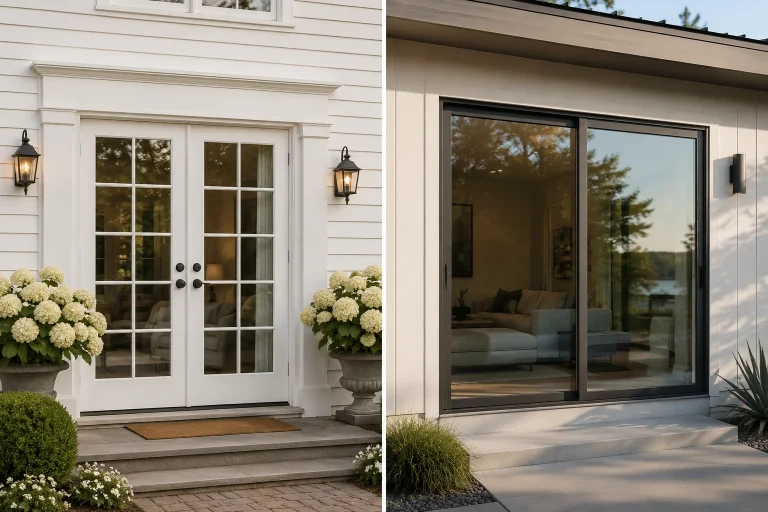
French doors vs sliding glass doors TLDR: French doors win for classic style, wide openings, and curb appeal, while sliding glass doors are the better pick for tight spaces, modern homes, and low-maintenance living. The right choice depends on your home’s layout, architecture, and budget.
Davis Window and Door has installed about 9,000 patio doors across Atlanta and Charlotte since 1972, roughly split 40% French to 60% sliding. Based on our experience, we created this guide to walk you through every factor that matters.
Quick Verdict: French Doors vs Sliding Glass Doors
Sliding glass doors are the better fit for a smaller patio, a modern or contemporary home, or a layout that can’t spare floor space for a swinging door. They glide smoothly, clean up easily, and work well in compact rooms.
French doors are the stronger pick for classic curb appeal, a wide usable opening for entertaining, or a traditional neighborhood where resale value matters. French doors make a design statement sliding doors can’t replicate.
| Criteria | French Patio Doors | Sliding Patio Doors |
| Space Required | Needs swing clearance | No swing arc needed |
| Energy Efficiency | Strong with compression seals | Good; track gaps can allow drafts |
| Aesthetic Style | Classic, traditional, elegant | Modern, clean-line |
| Maintenance | Hinge and weatherstrip upkeep | Track cleaning, roller upkeep |
| Security | Strong with multi-point locking | Strong with anti-lift hardware |
| Ventilation | Full opening width | Up to ~50% of panel width |
| Accessibility | Swing can be tricky for mobility limits | Generally easier to operate |
Glass quality, hardware grade, and weatherstripping cut across both door types; a well-built sliding door can outperform a budget French door, and vice versa. Installation quality matters as much as style, so choose manufacturer-certified installers backed by a labor warranty from the start.
What Are French Patio Doors?
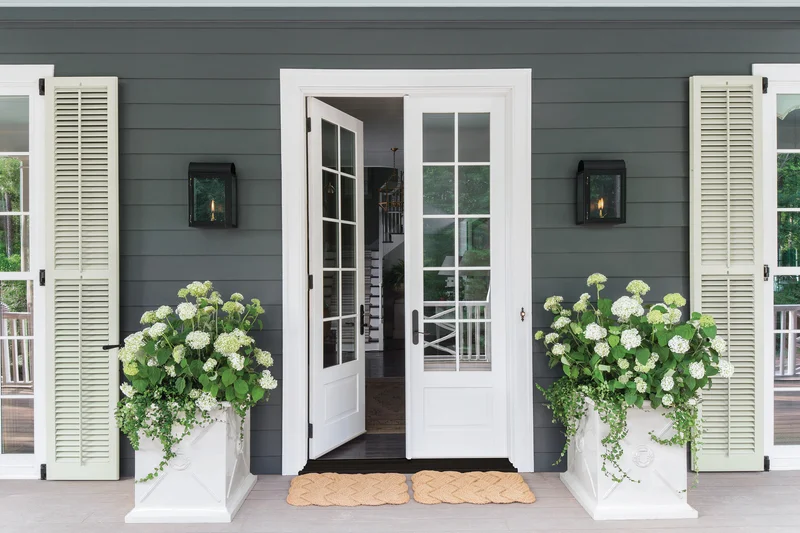
French patio doors are hinged double doors with full-length glass panels that open from the center: one panel swings in, and the other swings out. The classic look features divided-light grilles and traditional hardware, pairing naturally with colonial, craftsman, and Victorian-style homes. Multi-panel or folding configurations fold back for a near-full-wall opening. Marvin’s Elevate and Ultimate collections offer French door options for a traditional look with a premium fiberglass or wood-clad build.
Inswing vs. outswing: Inswing doors keep exterior hardware protected from weather but need clear interior floor space. Outswing doors free up the interior but require clear exterior clearance, and they tend to seal slightly better against wind-driven rain since the panels press into the frame.
Material options: Wood offers the warmest look but the most upkeep. Fiberglass mimics wood grain, resists moisture and dents, and needs very little maintenance; a solid middle ground for most climates. Steel is the most affordable and secure but can rust if the finish is compromised.
What Are Sliding Glass Doors?
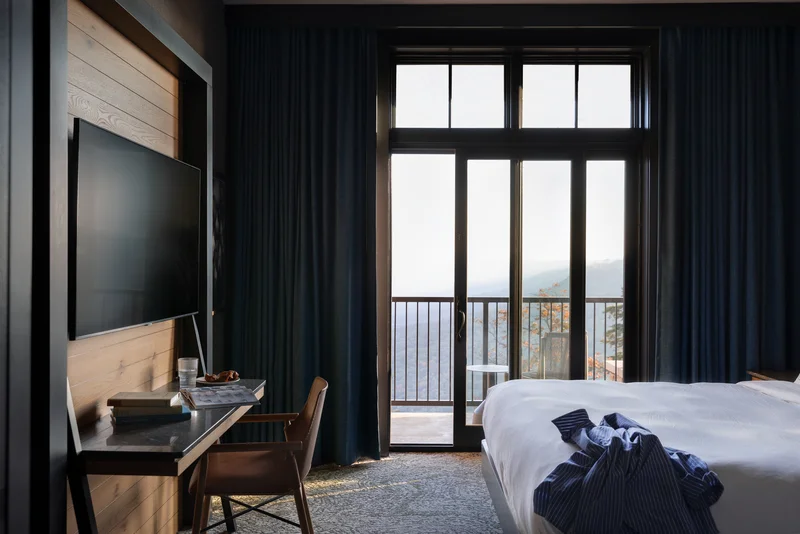
Sliding glass doors have one fixed panel and one or more panels that glide horizontally along a track; no swing arc required. A standard 2-panel setup fits openings in the 5–8 foot range; a 3-panel configuration suits larger openings needing more glass and ventilation.
Sliding doors suit modern and contemporary homes, with minimal framing and maximized glass area. Common materials are aluminum (slim-profile, popular in modern builds), vinyl (low maintenance, good thermal performance), and fiberglass (strong, energy efficient, higher price point).
For openings 10 feet or wider, multi-slide or pocket sliding systems stack or fully recess panels for a near wall-to-wall opening. These premium configurations sit in the same price tier as large French door setups like bi-fold or accordion styles, so the choice often comes down to architectural style rather than budget.
Cost Factors: What Actually Changes the Price
Two-panel sliding glass doors run roughly $2,500–$6,000+ installed, while French doors average $3,000–$7,000+; a 20% premium driven by heavier framing, multi-point locking hardware, and more labor-intensive installation. The biggest cost drivers for either door type are:
- Glass type (double-pane is standard; triple-pane adds cost and insulation)
- Frame material (fiberglass costs more than vinyl; wood costs the most)
- Custom sizing versus standard rough-opening sizes
- Decorative hardware and glass upgrades
- Local labor and the condition of the existing rough opening
French doors need a level, plumb opening for proper hinge alignment; sliding doors need a perfectly level track. Converting from one door type to another typically costs more than a like-for-like replacement because it involves reframing. An accurate number requires a certified installer to assess the existing opening, not just the door size.
Request a consultation with Davis Window and Door for a free quote.
Energy Efficiency: Which Performs Better?
Energy performance depends more on glass quality and weatherstripping than on door style. Sliding doors have a weak point at the track and panel overlap, where air can infiltrate if the track is worn. For that reason, French doors with high-quality compression seals can outperform lower-grade sliding doors in air infiltration.
Key factors to check in either door type: a U-factor of 0.30 or below, Low-E glass coatings, double vs. triple pane (especially useful in hot Atlanta summers or cold Charlotte winters), and weatherstripping quality; budget doors often cut corners here.
A well-specified French door with triple-pane glass and compression seals performs comparably to a well-specified sliding door at a similar price point. Glass package and seal integrity move the needle on comfort and bills far more than door style does.
Security and Maintenance
French doors meet at a center seam called the astragal, which can be a weak point without a multi-point locking system that engages the frame at the top, bottom, and center; worth requesting as an upgrade. Sliding doors can be lifted off the track without anti-lift pins; confirm this hardware is included, along with a secondary lock.
Sliding doors need periodic track cleaning and eventual roller replacement; normal wear on a door that moves daily. French doors need periodic hinge tightening, weatherstrip replacement every few years, and attention to the astragal seal; wood French doors also need repainting. Both styles can last 20–30 years or more with proper care, and material choice affects longevity more than swing vs. slide.
Which Style Fits Your Home?
French doors win when: the home is traditional, craftsman, or colonial; a wide opening for entertaining matters; the door is meant to be a design focal point; or curb appeal in a traditional neighborhood is the priority.
Sliding doors win when: the patio or room is tight on space; the home is modern or contemporary; accessibility is a concern, since there’s no heavy panel to push and no threshold lip to navigate; or an open-concept layout benefits from a door that visually disappears when open.
Does One Door Type Add More Home Value?
French doors carry a well-earned reputation for boosting curb appeal in traditional and suburban markets, standing out in listing photos and home tours. Sliding glass doors can be just as strong a value-add in coastal, southwestern, or contemporary markets where indoor-outdoor living is a major selling point.
Replacing an aging, drafty door with either style is a sound investment compared to doing nothing; the key is matching the door to the home’s architecture and to what local buyers respond to.
Ready to compare options in person? Schedule a consultation with a certified Davis Window and Door installer for a quote tailored to your specific opening. Browse Davis reviews, or see the full doors replacement lineup before deciding.