


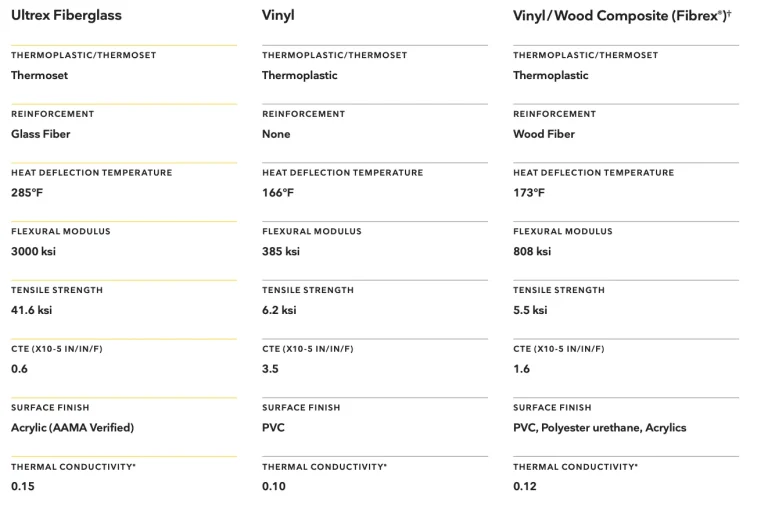
Upgrading your home and debating fiberglass vs. vinyl windows? Fiberglass windows generally outperform vinyl in energy efficiency, durability, and lifespan. The right choice depends on your climate, your home’s style, and how long you plan to stay. For homeowners across Atlanta and Charlotte weighing the two, here’s how the materials compare and where each makes sense.
What Is a Fiberglass Window?
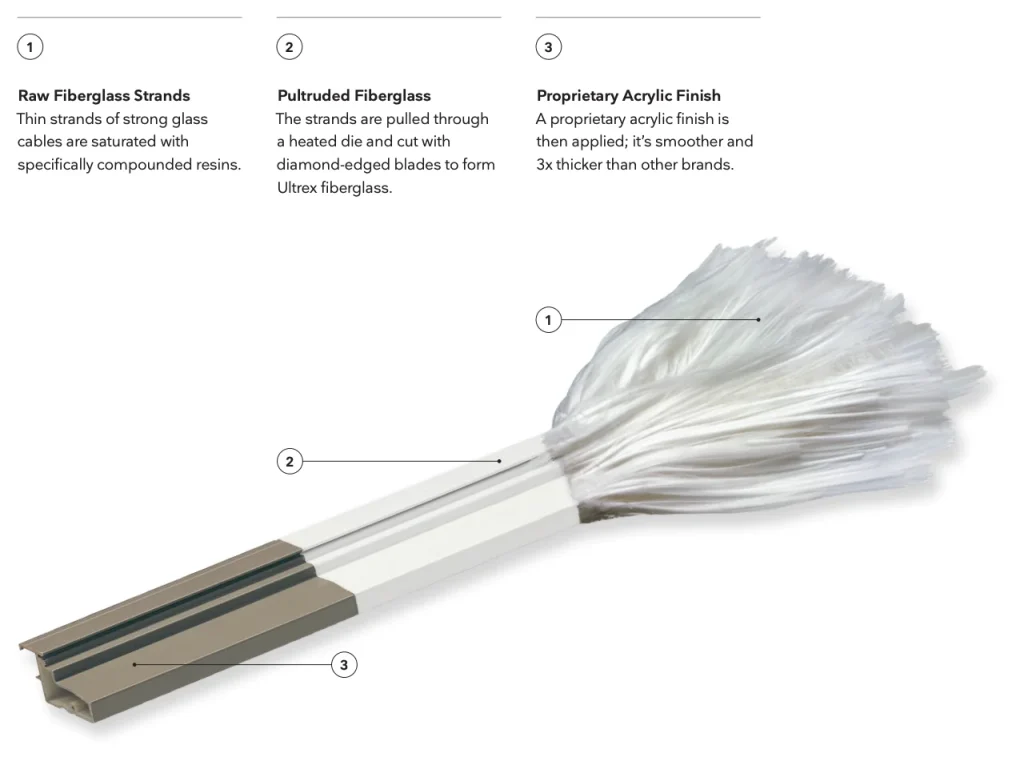
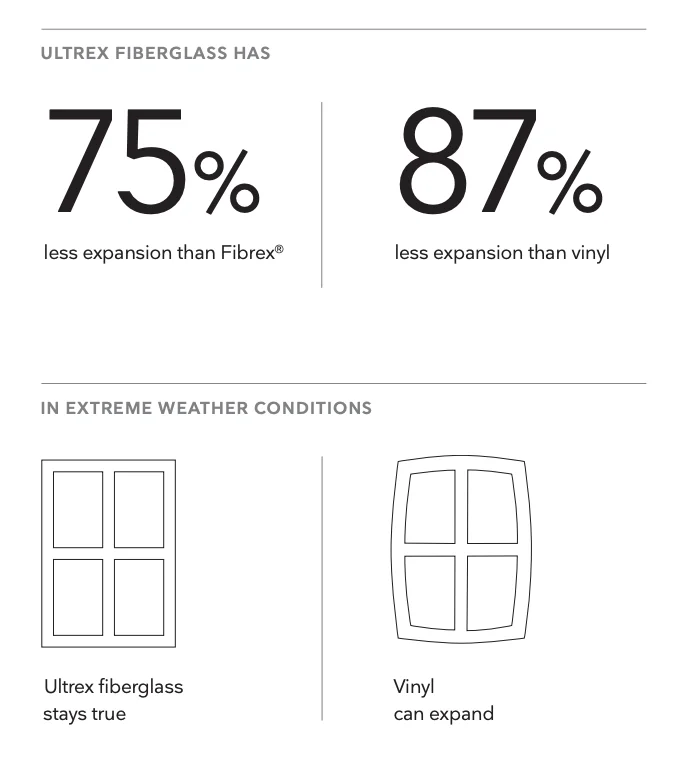
A fiberglass window frame is made from woven glass fibers set in resin, then formed into a rigid frame through a manufacturing process called pultrusion. That process produces a dimensionally stable frame that expands and contracts at nearly the same rate as the glass, helping keep seals tight over time.
Fiberglass advantages:
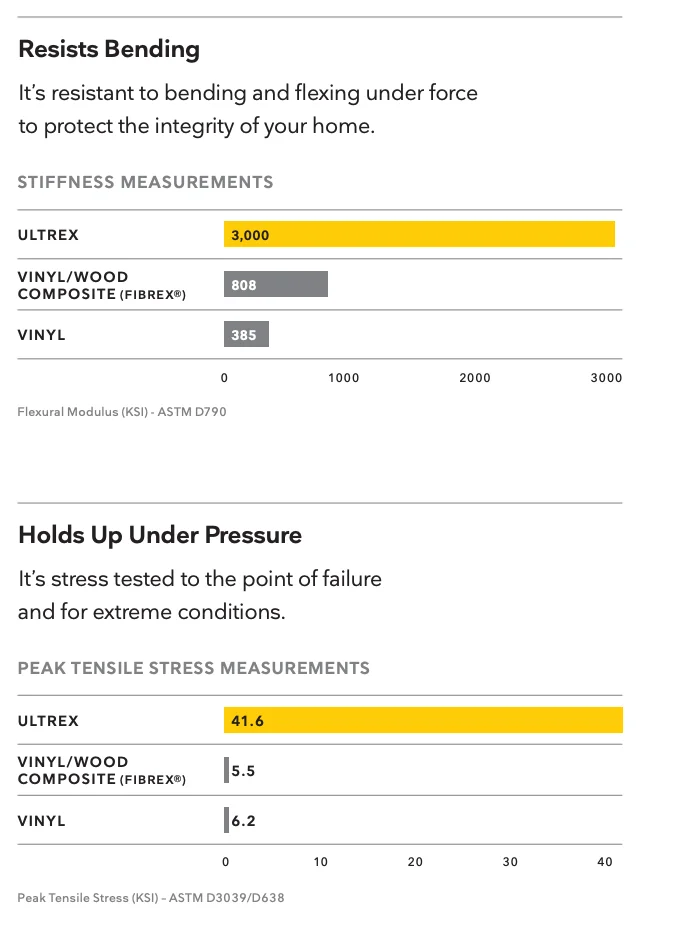
- Up to 8 times stronger than vinyl and more impact-resistant, which allows for thinner frames and larger glass sizes
- Naturally resistant to warping, rotting, and corrosion
- Can be painted, so color options aren’t limited to the manufacturer’s factory finish
- Typically backed by 30- to 50-year lifespans, according to industry data
Fiberglass trade-offs:
- Fewer off-the-shelf finish options than wood, though painting closes some of that gap
What Is a Vinyl Window?
A vinyl window frame is made from PVC (polyvinyl chloride), a synthetic plastic that’s been the most common replacement window material in the U.S. for decades. Vinyl frames are hollow or foam-filled and welded at the corners.
Vinyl advantages:
- Lower upfront material cost than fiberglass
- Low maintenance; no painting required
- Widely available in standard sizes
Vinyl trade-offs:
- Expands and contracts more than fiberglass with temperature swings, which can affect seal life over time
- Shorter typical lifespan than fiberglass
- Fewer color and finish options; most vinyl comes in a handful of standard tones
Fiberglass vs. Vinyl Windows: Energy Efficiency & Durability
Frame material affects a window’s U-factor, a rating that measures how much heat passes through the window; lower numbers mean better insulation. Industry averages put fiberglass around a 0.20 U-factor, compared to roughly 0.30 for vinyl.
In practical terms, fiberglass’s dimensional stability helps it hold a tighter seal across temperature swings, which matters most in climates with real heat or real cold; both states, Georgia and North Carolina, check the box depending on the season.
That said, the glass package (double-pane, low-E coatings, gas fills) usually affects real-world performance as much as the frame material does. Look for the ENERGY STAR label and the NFRC rating sticker on any window you’re comparing; those are the two most reliable, independently verified performance indicators, regardless of brand.
Strength, Aesthetics & Durability
This is where fiberglass differs most clearly from vinyl. Because fiberglass is up to 8 times stronger than vinyl, it can be engineered into much narrower frame profiles for the same structural performance. This means more glass, less visible frame, and a cleaner, more streamlined look than vinyl’s bulkier sightlines. That’s why fiberglass is a common choice for larger openings and glass walls.
This added strength also supports a longer service life: fiberglass frames commonly last 30 to 50 years, compared to 20 to 30 years for vinyl, since fiberglass resists the warping and softening that comes with vinyl’s greater expansion and contraction.
Fiberglass and Vinyl Windows Cost Breakdown
Fiberglass isn’t automatically more expensive than vinyl; depending on the options chosen, it can end up higher or lower. A few things drive the price more than frame material alone:
- Window style (casement vs. picture vs. sliding), glass package, size, and installation type (insert vs. full-frame replacement)
- Color and finish: Custom colors and finishes can narrow or erase any gap between fiberglass and vinyl
The main caveat: national averages don’t reflect regional labor rates, home age, or opening condition. Davis Window and Door’s certified installers can assess your specific opening and provide an accurate quote.
Which Material Handles Georgia and Carolina Weather Better?
Atlanta summers push a lot of heat and UV exposure through glass and frame alike, and Charlotte winters bring temperature swings that stress a frame’s seal over years of expansion and contraction.
Fiberglass’s stability in both conditions helps it hold up well in this region long-term, though a well-built vinyl window with a strong glass package still performs adequately for most homes here. The bigger factor for either material is proper installation: even the best frame underperforms if it isn’t sealed correctly on day one.
Marvin Fiberglass Windows: A Closer Look
Davis Window and Door carries Marvin’s full window lineup, Elevate, Essential, and Ultimate. Marvin’s proprietary Ultrex fiberglass is featured in the Elevate and Essential collections. Essential is an all-fiberglass line, Ultrex on both the interior and exterior, built for homeowners who want fiberglass’s durability and energy performance without a wood-window price tag. Elevate pairs an Ultrex fiberglass exterior with a wood interior for a more traditional look.
Learn more about Marvin’s fiberglass options →
Get Expert Guidance on Window Replacement Today
Choosing between fiberglass and vinyl is only part of the decision; the right fit depends on your home’s specific openings, your climate exposure, and how long you plan to stay in the house. Davis Window and Door’s manufacturer-certified installers walk through those factors in person, so recommendations are based on your home, not a national average.
Every installation comes with a labor warranty that matches the product warranty; full coverage, no gaps between what the manufacturer backs and what the installer backs. There’s no pressure to decide on the spot and no single-brand agenda: we carry multiple trusted manufacturers, including Marvin, Quaker, ProVia, and more, so the conversation starts with what performs best for your home and budget.
Schedule a Consultation and get a clear, no-obligation recommendation for your windows.
See what Atlanta and Charlotte homeowners are saying: Read Reviews.

Frequently Asked Questions
Here are answers to frequently asked questions about fiberglass and vinyl windows.
Is Fiberglass Worth the Extra Cost over Vinyl?
It depends on the options selected; size, style, glass package, color, and finish all affect price, and fiberglass isn’t automatically the higher-cost option. For homeowners planning to stay long-term, fiberglass’s longer lifespan and lower U-factor are worth weighing against vinyl’s typical cost.
Do Vinyl Windows Lower Energy Bills?
Yes. Any new, properly installed vinyl window will outperform old single-pane or aluminum windows on energy efficiency; it just won’t insulate quite as well as fiberglass, frame for frame.
Can Fiberglass Windows Be Painted A Different Color?
Yes, fiberglass accepts paint, so color isn’t limited to the manufacturer’s standard finish options.
Which Material Lasts Longer?
Fiberglass typically lasts 30 to 50 years, compared to vinyl’s 20 to 30 years, largely because fiberglass resists warping and expansion.