


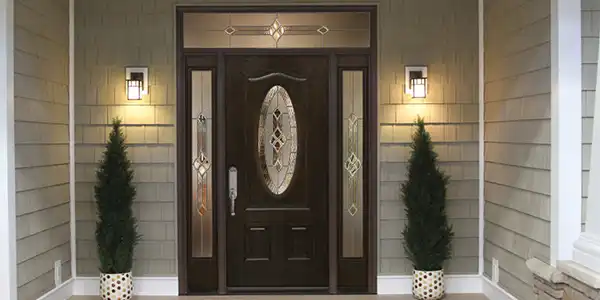
A front door needs to look right, close smoothly, and stand up to daily use. Fiberglass is worth considering when you want the appearance of a painted or woodgrain entry door with practical upkeep. For homeowners in Atlanta and Charlotte, the best choice depends on the whole entrance: the door, frame, glass, hardware, and installation.
What Is a Fiberglass Entry Door?
A fiberglass entry door uses molded fiberglass exterior surfaces. Many models combine those surfaces with an insulating core and offer either a smooth finish or a textured woodgrain appearance. Construction varies, so compare a specific door system rather than assuming every fiberglass door performs alike.
Benefits of Fiberglass Doors
1. A Wood Look with Different Material Options
If you like the character of a wood entry, fiberglass gives you another way to achieve it. ProVia’s fiberglass door options, for example, include woodgrain textures, stain and paint finishes, and decorative glass. Look at an actual finish sample beside your brick, siding, and trim before choosing.
2. Durability for an Exposed Entrance
Fiberglass is a durable, weather-resistant material, making it a useful option to discuss for an entrance exposed to humidity and changing weather. The frame and threshold still deserve attention. Ask your installer to inspect those parts of the opening rather than replacing only the visible door slab.
3. Manageable Routine Care
Choose a finish with care requirements that suit your household. Ask for the manufacturer’s cleaning and refinishing instructions before ordering, including which cleaners to avoid. A periodic check of the finish, weatherstripping, hinges, and door sweep is a sensible part of caring for any entry system.
4. Options for an Insulated Door System
Insulated fiberglass models can be part of an energy-efficient entrance. Compare the complete configuration, including its glass and seals. A door with a large glass panel is a different product from a solid slab, even when both share the same style name. Request the performance information for the version you intend to buy.
5. Flexibility in Light and Privacy
A replacement entrance is a chance to reconsider how the foyer feels. Would a small glass panel bring in enough daylight? Would privacy glass make more sense near the street? Review the view from both sides of a sample, and think about how the entrance will look after dark with interior lights on.
6. A Coordinated Exterior Update
Panel style, finish, glass, and hardware can change the impression of an entrance together. Start with the architecture of your home and narrow the choices from there. Bring a straight-on photograph of the doorway to your consultation so the discussion includes the surrounding trim and porch.
Is Fiberglass the Right Choice for Your Home?
Compare fiberglass with other entry-door materials around your priorities: appearance, exposure, maintenance, and budget. Our fiberglass vs. steel door guide can help you prepare questions. Avoid choosing from the slab price alone; request a written scope covering the frame, hardware, glass, removal, installation, and finishing work.
Questions to Ask Before Ordering
- Which exact finish and glass configuration are included?
- Does the existing frame need replacement or repair?
- How will the threshold and surrounding opening be finished?
- What maintenance does the manufacturer require?
- Who handles product questions and installation service afterward?
Explore Your Next Entry Door with Davis
Browse our replacement door options, then bring your ideas and questions to Davis Window and Door. We help Atlanta and Charlotte homeowners compare choices for their homes. Request a consultation to discuss your entrance and the next steps.