
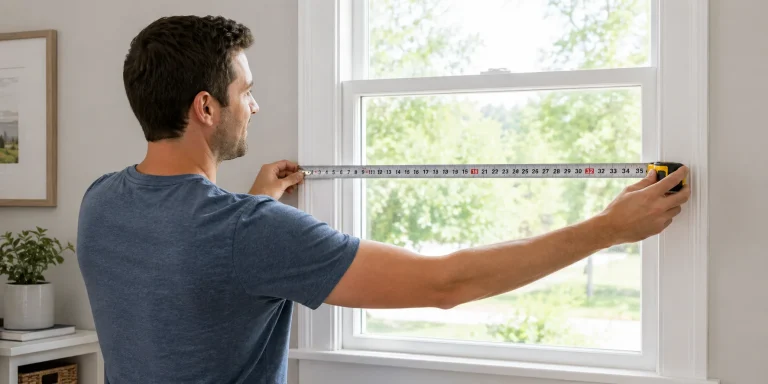
By the end of this guide, you’ll have three verified measurements per window: width, height, and squareness, ready to use for a quote or order. Learning how to measure for replacement windows correctly is one of the most valuable things you can do before starting a replacement project, and it’s easier than most people expect.
We’ve helped countless homeowners get it right the first time, and whether you work with our certified window installers or tackle it yourself, having accurate numbers in hand means no surprises when your windows arrive.
What You’ll Need Before You Start Measuring
Grab these tools before you begin measuring windows:
- Steel tape measure (not a cloth or fabric tape)
- Pencil and notepad or your phone’s notes app
- Level or speed square to check squareness
A steel tape measure matters because cloth tapes flex and sag, which can throw off your numbers by a quarter inch or more. That small gap is enough to cause fit problems. Before you start, clear the windowsill of any objects and make sure you have full access to the full-frame opening. For large or high windows, having a helper nearby makes the process easier and safer.
All measurements should be taken inside your home, where you can clearly see the actual frame opening.
What You Need to Decide Before You Start Measuring
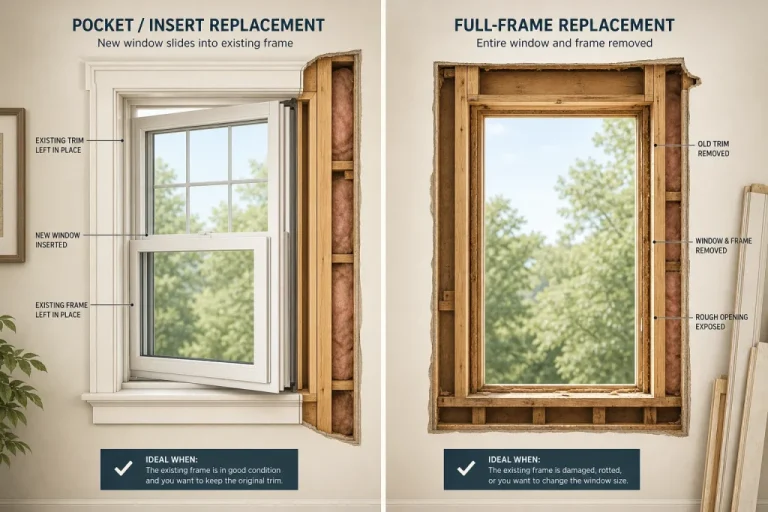
Before you measure, decide whether you’re doing an insert replacement or a full-frame installation; the method affects what you measure.
A pocket installation (also called an insert replacement) keeps your existing frame in place and fits a new window unit inside it. This is the right approach when your current frame is structurally sound, square, and free of rot or water damage.
A full-frame replacement removes everything (the sash, frame, trim, and casing) down to the rough opening. This is the right approach when the existing frame is damaged, out of square, or when you want to change the window size or style entirely.
How to tell which one you need: Inspect the frame around your existing window. If the wood is firm, dry, and undamaged, a pocket install is likely sufficient. If you notice soft spots, rot, swelling, or significant drafts coming from the frame itself, a full-frame replacement is probably the better investment.
How to Measure for Replacement Windows: Pocket Installation
If you decide you only need a pocket installation because your frame is structurally sound and free of rot/water damage, then follow the steps below.
Step 1: Check If Your Window Opening Is Square
Most homeowners skip this step entirely, and it’s the one that catches them off guard later. Windows in older homes shift and settle over decades, and an opening that looks square to the eye often isn’t.
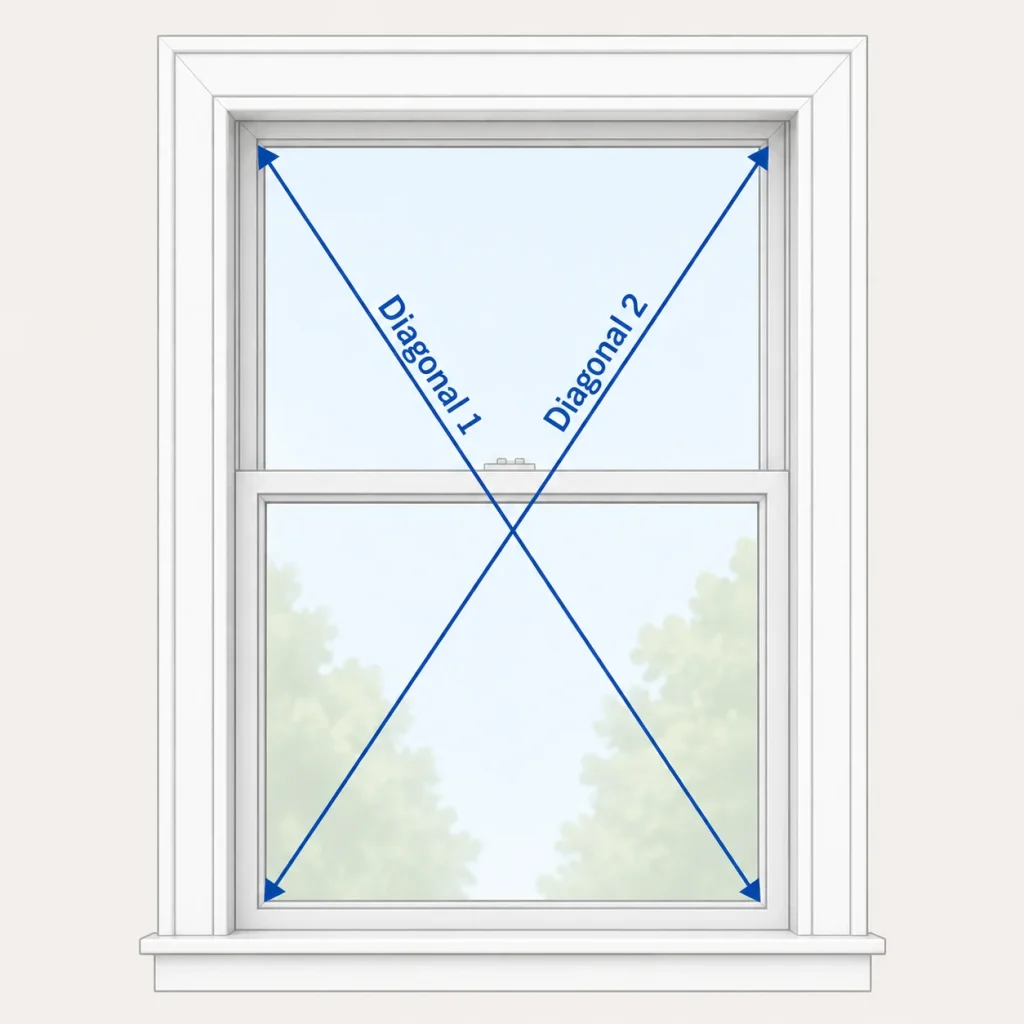
To check squareness, measure both diagonals of the window opening: corner to corner, top-left to bottom-right, then top-right to bottom-left. If those two diagonal measurements differ by less than 1/4 inch, your opening is square enough for a standard replacement unit.
If the difference exceeds 1/4 inch, flag the discrepancy when you contact your window supplier. The installation may require shimming or a custom-sized unit. Catching this before you order is far better than discovering it after the window arrives.
Step 2: Measure the Width of Your Window
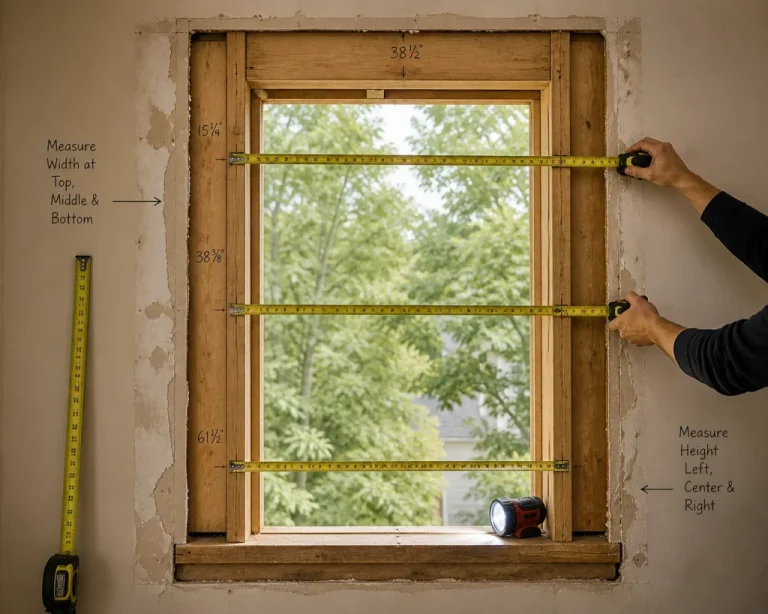
Measure the width of the rough opening, which means inside frame edge to inside frame edge. Do not measure only the trim, casing, or glass.
We advise taking measurements at three points: the top, middle, and bottom of your existing window opening. Record all three numbers. Then use the smallest of the three numbers as your width. This is how to take accurate measurements that actually reflect the tightest point of your opening.
The reason you use the smallest number: your new window needs to fit at the tightest point of the opening. If you order based on a wider measurement and the middle is narrower, the window won’t seat properly.
A common mistake is measuring only the glass or the sash. You want the full frame opening, not just the part you can see through.
Not sure your numbers are right? Our certified installers can take measurements for you before you commit to anything.

Step 3: Measure the Height of Your Window
Follow the same three-point method for height. Measure from the bottom of the frame (the sill) to the top of the frame opening on the left side, center, and right side. Record all three, then use the smallest number.
If the sill shows wear or has a slight slope (common in older homes), measure from the sill surface to the top of the frame at each point, keeping your tape measure perfectly straight up and down rather than tilted to follow the angle of the sill. Also note that this measurement should run from the sill itself to the top of the frame opening, not from any interior trim, stool, or decorative casing that may sit above or in front of the sill.
These height numbers, combined with your width measurements, are exactly what you’ll need when you contact a supplier to measure windows and get a cost estimate.

How to Measure for Replacement Windows (Full-Frame Installation)
Full-frame replacements remove the sash, frame, trim, and casing, down to the rough opening in the wall. Because of this, you’re measuring a larger, more exposed opening than you would with a pocket install. Here’s how to do it correctly.
You’ll need the same tools as a pocket install: a steel tape measure, pencil and notepad, and a level or speed square. For full-frame jobs, also have a flashlight handy; once the old frame is out, the rough opening can be dim and harder to read clearly.
Step 1: Expose or Inspect the Rough Opening
If you’re measuring before removal (for quoting purposes), measure from the inside of the house to the inside edge of the existing frame, not the trim or casing. You’re trying to estimate the rough opening behind the frame.
If the old window has already been removed, measure the rough opening directly: the actual structural opening in the wall, from stud to stud (width) and from sill plate to header (height).
Step 2: Measure the Width
Measure the rough opening width at three points: top, middle, and bottom, from the inside face of one framing stud to the inside face of the opposite stud. Record all three and use the smallest number. Your new window unit needs to fit at the tightest point.
For full-frame installations, manufacturers typically size the window to fit with 1/2 inch of clearance on each side for shimming and leveling. Confirm the clearance requirement with your supplier before ordering.
Step 3: Measure the Height
Measure the rough opening height at three points: left, center, and right, from the top of the sill plate to the bottom of the header. Record all three and use the smallest number.
The same rule applies: manufacturers typically allow 1/2 inch of clearance top and bottom. Verify this with your supplier.
Step 4: Check for Square
Measure both diagonals of the rough opening, corner-to-corner. If they differ by more than 1/4 inch, the opening is out of square. Flag this with your installer or supplier before ordering. An out-of-square rough opening on a full-frame job can be corrected with shimming, but it needs to be planned for in advance.
A Note on Full-Frame vs. Pocket Measurements
Why Precision Matters More Than You Think
A window ordered even a quarter inch too wide or too tall won’t seat correctly in the frame. Depending on the supplier, this can mean return shipping costs, delays of several weeks in reorders, and additional installation labor to work around the mismatch. In some cases, a poor fit attempted by an uncertified installer can void a labor warranty entirely, leaving you responsible for any follow-up costs.
Properly measuring your windows for replacement estimates also means the quote you receive reflects reality; no unpleasant adjustments when the installer arrives, and the numbers don’t match.
If you’re noticing issues beyond sizing, look for signs your windows need replacement before you order, and review these window replacement tips to feel fully prepared. When you’re ready to browse, explore our window options. We offer a wide range of window replacement solutions to fit any budget and need.
When our certified installers handle the job, our labor warranty means you’re covered if anything doesn’t fit as expected. If you’d like to talk through your project or get accurate measurements before committing, reach out whenever you’re ready. Davis Window and Door is here to help.