


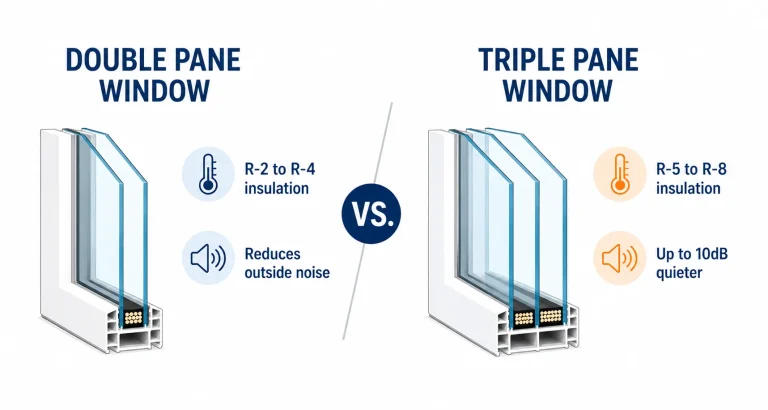
Triple-pane windows have lower U-factors (0.15–0.25 vs. 0.25–0.35) and higher R-values (5–8 vs. 3–4), giving fewer drafts, more stable indoor temperatures, less condensation, and lower heating/cooling bills, especially in extreme climates; however, they cost 10–15% more upfront. Double-pane windows are more budget-friendly and perform well in moderate climates, making them a practical choice for older homes with frame limitations, secondary or short-term stays, and situations where noise isn’t a major concern.
Choosing between double pane vs triple pane windows depends on your climate, budget, noise concerns, and payback tolerance. Both window replacement options deliver meaningful upgrades, but the right choice isn’t the same for every household. This guide is based on manufacturer specifications and field experience from Davis Window and Door’s certified installation teams, serving all of Atlanta and Charlotte.
Key Takeaways
- Two vs. three panes: Double-pane = 2 glass layers + 1 insulating gap; triple-pane = 3 layers + 2 gaps (often argon-filled)
- R-value: Double-pane ~R-3 to R-4; triple-pane ~R-5 to R-8 meaning triple-pane has greater insulating power
- Cost: Triple-pane typically runs ~10–15% more upfront than comparable double-pane
- Weight: Triple-pane is heavier, which can affect structural/installation needs (especially larger openings or upper floors)
- Noise reduction: Both improve on single-pane; triple-pane offers additional sound control
- Double-pane is best for: Moderate climates, tighter budgets, full-house replacements
- Triple-pane is best for: Cold climates, high-noise areas (highways/airports), long-term homeowners, condensation/draft-sensitive homes
- Single-pane baseline: Allows the most heat transfer, drafts, and condensation, with the least sound control; biggest efficiency jump comes from replacing single-pane with either option
- Added benefits of upgrading: Improved comfort/temperature consistency; potential energy savings and reduced carbon footprint per ENERGY STAR
Double-Pane vs Triple Pane Windows: Core Differences

The core difference between double-pane and triple-pane windows comes down to the number of glass layers and the insulating gas cavities (the sealed spaces between the panes of glass).
- A double-pane window uses two glass panes with a single sealed cavity filled with argon or krypton gas.
- A triple-pane window adds a third glass layer, creating two gas-filled cavities instead of one.
Double-pane windows typically reach an R-value of R-3 to R-4. Triple-pane windows climb to R-5 to R-8, roughly a 40% efficiency gain. R-value measures resistance to heat flow; so higher values mean the window blocks heat transfer more effectively. This means triple-pane windows lose less heat than double-pane windows.
Double-pane windows typically have a U-factor of 0.25 to 0.35, while triple-pane windows range from 0.15 to 0.25. U-factor measures how much heat passes through a window, so lower values mean less heat escapes in winter (or enters in summer). This means triple-pane windows retain more indoor temperature stability than double-pane windows, especially during extreme heat or cold.
Low-E coatings also play a major role. Low-E (low-emissivity) coatings are ultra-thin, invisible metallic layers applied to window glass that reflect infrared heat while letting visible light through, reducing heat loss in winter, blocking heat gain in summer, and limiting UV-related fading. It acts as a performance multiplier regardless of pane count, so coating quality matters as much as the number of panes.
| Category | Double-Pane | Triple Pane |
| Glass Layers | 2 panes of glass | 3 panes of glass |
| U-Factor | 0.25–0.35 | 0.15–0.25 |
| R-Value | R-3 to R-4 | R-5 to R-8 |
| SHGC (Solar Heat Gain) | ~0.76 (uncoated); lower with Low-E | Lower overall due to dual Low-E coatings |
| Energy Efficiency | Improved insulation over single-pane | Superior insulation performance |
| Noise Reduction | Good | Better (though laminated glass targets sound more precisely) |
| UV Protection | Moderate (with Low-E) | Higher (with dual Low-E coatings) |
| Condensation Resistance | Moderate | Better; reduces interior fogging in cold and humid conditions |
| Weight and Installation | Standard | Up to 50% heavier; may need reinforced framing |
| Upfront Cost | Lower | 10-15% more than double-pane |
| Estimated Payback Period | 15–20 years (mild climates) | 10–12 years (cold climates) |
| Long-Term ROI | Solid in mild climates | Stronger in cold climates |
| Typical Lifespan | 20–25 years | 20–25 years (seal integrity depends heavily on installation quality) |
| Best Climate Fit | Zones 2–4 | Zones 5–7 |
According to ENERGY STAR, a standard double-pane window allows approximately 75% of the sun’s heat into your home, which is exactly why upgrading your glass package can directly impact energy costs. Research from the Pacific Northwest National Laboratory found that triple-pane windows saved an average of 12% on heating and 28% on cooling for a 1,500-square-foot home, a meaningful difference in high-heating-cost climates.
Which Is Better For Your Home: Double-Pane or Triple Pane

Triple-pane may be right for you if you:
- Live in a cold climate with long winters
- Deal with noise from highways, airports, or urban areas
- Plan to stay long-term
- Want maximum insulation and comfort
- Want fewer drafts and less condensation on windows
Double-pane may be the better fit if you:
- Live in a moderate climate
- Want efficiency at a lower cost
- Are replacing multiple windows on a budget
- Prioritize a balance of performance and affordability
Double-pane windows offer a major upgrade over single-pane in most homes, while triple-pane adds extra value in extreme climates or high-heating-demand regions. Browse Davis Window and Door’s full window lineup, including Marvin Signature (Ultimate and Modern), Marvin Elevate, and Marvin Essential glass packages available in double- and triple-pane options.
The Hidden Factor: Installation Quality Matters More Than Pane Count
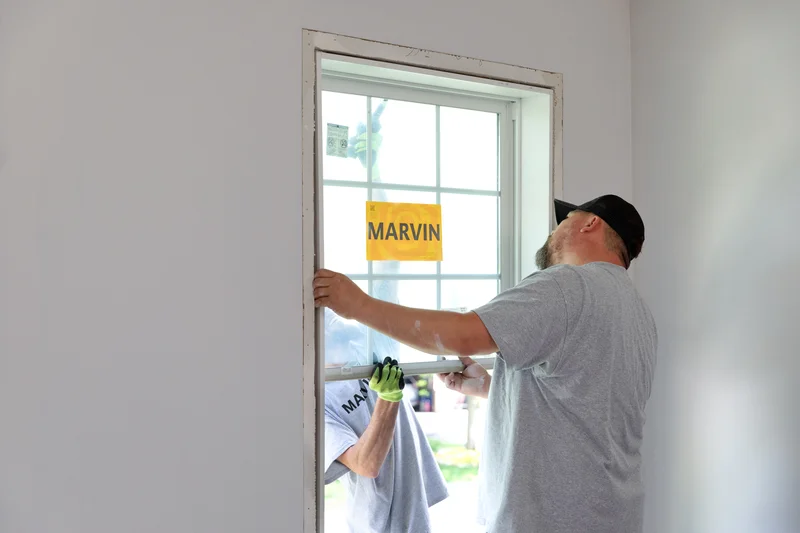
A well-installed double-pane window will outperform a poorly installed triple-pane window every time.
Air sealing around the frame, proper flashing, and frame insulation all directly affect real-world thermal performance. Triple pane’s added weight increases installation complexity. If the frame isn’t properly supported, it can stress the gas-fill seals over time, leading to earlier failure and lost efficiency. In practice, the difference between double-pane and triple-pane windows often comes down to who installs them.
Davis Window and Door has built its reputation in Atlanta and Charlotte on more than 100 years of combined sales and technical experience. As a Certified Installing Retailer, we install every window to the manufacturer’s specifications and ensure it performs as rated. Every installation carries a labor warranty that matches the product warranty, so if something isn’t right with the work itself, it’s covered the same way the product is.
Premium Double-Pane and Triple Pane Windows From Davis Window and Door

No matter which option is right, Davis Window and Door offers high-quality replacement windows designed to meet the needs of homeowners across the Atlanta, GA, and Charlotte, NC, areas. We carry both double-pane and triple-pane windows, giving homeowners the flexibility to choose the best option based on budget, climate, and energy-saving goals.
Every installation is handled by manufacturer-certified professionals who take the time to properly fit and seal each window for lasting durability and performance.
Davis Window and Door offers a variety of window styles, including:
- Awning
- Bay/Bow
- Casement
- Double Hung
- Garden
- Picture
- Slider/Glider
- Specialty
- Steel Windows
- Wrought Iron Windows
Check out our window replacement options, or see reviews and testimonials from homeowners in Atlanta and Charlotte who chose Davis Window and Door for their home renovation projects!
Ready to upgrade your windows? Schedule a Consultation with Davis Window and Door’s team in Atlanta or Charlotte for a no-pressure evaluation of the right glass package for your home. Budget shouldn’t stand between you and a more comfortable home; ask about our financing options during your consultation to find a plan that fits.

FAQs about Double-Pane and Triple Pane Windows
Here are some frequently asked questions about double-pane and triple-pane windows.
What Is a Triple Pane Window vs Double-Pane Window?
A double-pane window has two glass panes with one insulating gas-filled cavity between them. A triple-pane window adds a third pane, creating two gas-filled cavities instead of one, which improves insulation and noise reduction.
What Are the Disadvantages of Triple Pane Windows?
Triple-pane windows cost 10–15% more upfront, weigh up to 50% more (sometimes requiring reinforced frames), and slightly reduce visible light transmission. In mild climates, the payback period can stretch to 15–20 years.
Are Triple Pane Windows Worth It?
It depends. They’re generally worth it in cold climates (IECC Zones 5–7), for homes near heavy noise sources, or for owners planning to stay for 10+ years. In moderate climates, double-pane windows often provide comparable value at a lower cost.
Are 20-Year-Old Double-Pane Windows Still Good?
Not usually. Most double-pane windows have a functional lifespan of 20–25 years, but their seals often fail earlier, leading to fogging, gas loss, and reduced efficiency. At 20 years old, a professional inspection is worth it to check the seal’s integrity. For more information, check out Davis Window and Door’s guide on when to replace windows.
Do Triple Pane Windows Reduce Noise?
Yes. The extra pane and air cavity reduce outside noise better than double-pane windows, though laminated glass is more effective if noise reduction is the primary goal.
How Much Are Triple Pane Windows?
Triple-pane windows typically cost 10–15% more than comparable double-pane windows. Exact pricing depends on size, frame material, and brand; a certified installer like Davis Window and Door can provide an accurate quote for your specific home.