
Door Anatomy
A door is more than just a way to enter or exit a room – it is a key element of your home’s design. At Davis Window and Door, we believe it is important to understand how a door works and what makes it effective. If you are installing a new door or replacing an old one, knowing the anatomy of a door can help you make smarter decisions.
Key Components of a Door
Doors have several key components that work together. Let’s break them down:
- Frame – The door frame surrounds and supports the door, allowing it to swing or slide properly. Residential door frames are typically made from wood but can be constructed from aluminum, fiberglass, or a composite material. They are available primed for painting or with a factory finish in various colors. A strong frame enhances security and longevity.
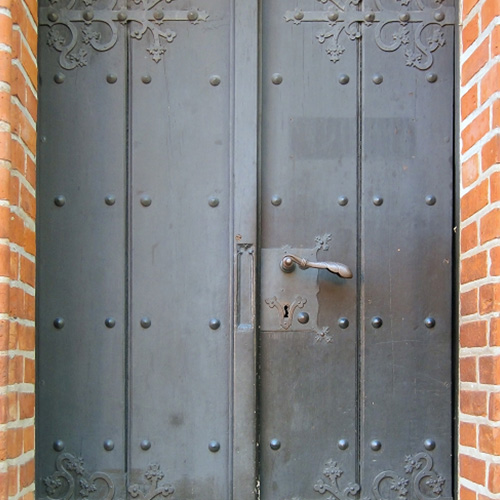
- Panel – The panel is the central part of the door. It can be solid or contain glass inserts to allow natural light in. Materials include wood, fiberglass, or steel, each offering different aesthetic and functional benefits. If you choose a wrought iron or custom steel door, the panel serves as both the face and structural core. It contributes to the door’s durability and style.
- Hinges – Hinges allow the door to open and close smoothly. They are typically metal and attach the door to the frame. High-quality hinges improve operation and enhance security. Durable hinges allow your door to function properly for years.
- Locking Mechanism – Security is one of the most important aspects of a door, and the locking mechanism plays a key role. This part keeps your home safe if it is a traditional deadbolt, a smart lock, or a thumb latch. At Davis Window and Door, we offer a range of locking options for steel and custom iron doors to suit your security needs.
- Weatherstripping – Weatherstripping seals the gaps around the door to prevent drafts. It keeps your home warm in the winter and cool in the summer. This simple addition improves energy efficiency by preventing heat loss and lowering energy costs.
- Threshold – The threshold is the bottom part of the door frame on which the door rests. It offers a seal at the bottom of the door, preventing air and water from entering your home. This part also adds a finishing touch to the door’s design. A well-made threshold makes sure your door is both secure and weather-resistant.
- Threshold – The threshold is the bottom part of the door frame on which the door reststhat the door rests on. It offers a seal at the bottom of the door, preventing air and water from entering your home. This part also adds a finishing touch to the door’s design. A well-made threshold makes sure your door is both secure and weather-resistant.
- Door Jamb Versus Door Frame – A door jamb is an individual section of a door frame. Two side jambs make up the vertical components of the door frame and the head jamb is the top horizontal component. Together, the jambs (along with mullion) comprise the door frame.
- Head Jamb – The top horizontal section of a door or window frame is called the head jamb.
- Mullion (Mull) – When two individual windows or a door and window are joined, the seam between the frames of the two units is called the mull, which is short for mullion. In this case, a door jamb has been joined to a window/sidelight jamb. The seam is typically hidden with a piece of trim called a mull casing.
- Glazing – Glazing is just another word for the glass in a door or window. The glazing in newer exterior doors like this one are made up of at least two layers of glass and sometimes three. Inert gas, usually argon, is injected between the glass layers to provide additional insulation. Nearly invisible coatings are added to glass to help manage the amount of light and heat conducted through a windowpane or reflected away from it. Glazing can be enhanced with tints and laminations in order to add privacy, provide decorative options, and increase strength.
- Sidelights – Sidelights are tall narrow windows found on one or both sides of a door. Sidelights allow more light into entryways, improve views, and can create a more welcoming entry point experience.
- Casing – Window and door casing trim is designed to hide the gaps between a window or door frame and the surface of the interior wall.
- Brick Mould – Brick mould is an exterior casing trim designed to conceal the gap between a window or door frame and the exterior wall surface. Brick mould is thicker than most interior casing trim profiles and provides a buffer between the window/door and the brick or other cladding surrounding it. Brick mould can be made of wood, aluminum, PVC, fiberglass, or composite materials and is the part of the door that a screen door or storm door is attached to.
- Weather-stripping – On exterior doors, weather-stripping helps seal the gaps between a door frame and a closed-door panel, weather-stripping is typically made of a resilient, flexible material like silicone, rubber, or foam.
- Door Sweep – The weatherstripping installed on the bottom of a door panel, a door sweep creates a weather resistant barrier between a door panel and sill.
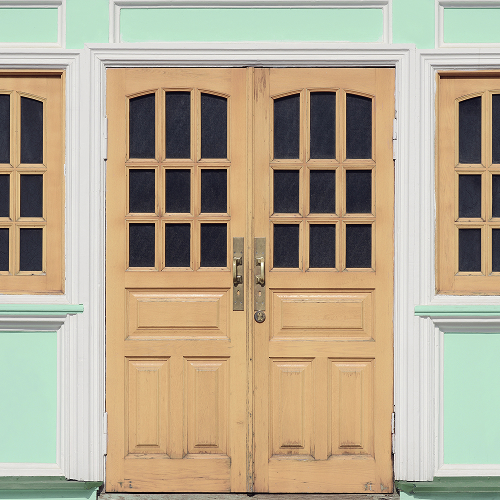
- Astragal – On an exterior double door arrangement like the one above, an astragal covers the seam between the two door panels and is fitted with weather-stripping to prevent wind and water from entering the house.
- Transom – A transom is a narrow window located above a door or window. Most transom windows do not operate, but if they do, they are typically hinged at the top like an awning window.
- Simulated Divided Lite Bars (SDLs) – Because large panes of glass are now stronger, less expensive to manufacture, and more energy efficient, muntin bars have largely been replaced with Simulated Divided Lite bars (SDLs), which rest on the surface of the glass.
- Grilles – Grilles are bars that create the effect of divided lites but are removable for easy glass cleaning. Grilles-Between-the-Glass (GBGs) are also available. As the name suggests, GBGs are bars that are permanently installed between the glass panes for easy cleaning and low maintenance.
- Muntin Bars – Up to the middle of the 19th century, large panes of glass were fragile and expensive to create. Muntin bars were joined together in order to create large expanses of glass from smaller individual panes.
- Rail – The narrow horizontal segments on a door panel are called rails. This door has a top, bottom, and a mid-rail.
- Stile- A stile is the narrow vertical segment located on either side of a door panel. One is called the lock stile and the other a hinge stile.
- Mullion – A mullion resembles a stile. It is the vertical component that separates two panels located in the middle of the door between the rails.
- Stop Moulding – Door stop moulding is attached to a door frame. It aligns the door panel within the frame and prevents the panel from swinging right through the opening.
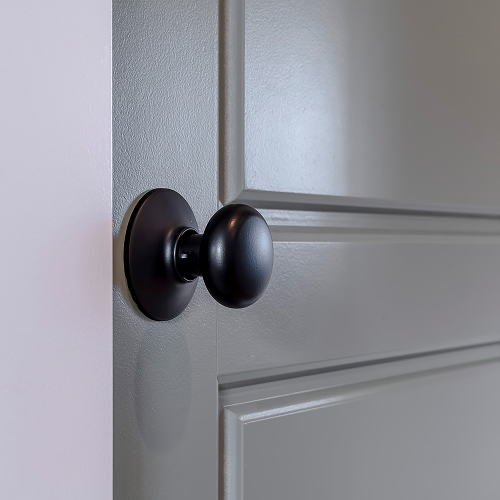
- Bore Hole – A bore hole is drilled into a door to accommodate a lockset.
- Latch – A door latch is a shaft that protrudes from the edge of a door panel and into the door frame securing the panel in place. When the handle is turned, the latch retracts allowing the door to be opened.
- Deadbolt – Similar to a latch, a deadbolt is a shaft that protrudes from the edge of the door panel and into the door frame securing the panel in place. Residential interior doors are not equipped with deadbolts, and not all exterior doors have them either. Deadbolts are considered an additional form of security and are most often set apart from the handle assembly, which means that a door with a deadbolt needs an additional bore hole. Multi-point locking hardware systems provide even more protection than a latch and deadbolt combination, and new home automation systems are available.
- Thumb Turn – A deadbolt is operated by turning a thumb turn on the inside of a house and by a key cylinder on the exterior side.
- Mortise Plates – These plates add strength to latches, deadbolts, and the door panel, which help prevent a forced entry.
- Strike Plates – Strike plates add strength to door frames, which help prevent a forced entry.
Why Understanding Door Anatomy Matters
Understanding how a door works can help you make the best decision for your home. For example, choosing a door with a strong, insulated frame helps keep your home energy-efficient. The proper weatherstripping can reduce drafts and make your home more comfortable. Selecting a secure locking mechanism makes sure your family stays safe.
You can choose the features that will benefit your home the most by knowing the parts that make up your door. If you want better security, energy efficiency, or a stylish design, the correct door anatomy can make all the difference.
How Door Anatomy Affects Your Home’s Comfort and Security
Every part of your door plays a role in your home’s comfort and security. For example, a well-insulated door can help keep your home comfortable, while a sturdy frame and high-quality locking system offers peace of mind. If you install iron, steel, or French doors, the combination of materials and features will enhance your home’s performance and look.
At Davis Window and Door, we help you choose the best doors for your needs. We work with top brands like Marvin Signature to offer beautiful, durable, and secure products. Plus, we offer professional installation so your new door works perfectly.
Why Choose Davis Window and Door?
With over 50 years of experience, Davis Window and Door is your trusted partner for window and door replacements. Our expert team is here to guide you through selecting the right door for your home, explaining the anatomy of each option along the way. From choosing the perfect frame to selecting the proper locking mechanism, we help you make an informed decision that is right for your home and budget.


